The 12 Best Retell AI Alternatives In 2026


Voice AI has crossed the line from novelty into infrastructure. The global voice AI agents market sits above $22 billion in 2026 and is forecast to hit $47.5 billion by 20341. Retell AI is one of the more visible players, but it's a developer-first toolkit — not a finished product for ops teams. If you're hunting for Retell AI alternatives because the API-heavy setup, layered pricing, or missing scheduling layer is slowing you down, this guide will help. We'll cover 11 platforms, including Zeeg — Europes leading AI voice agent and scheduling software that is created in Germany, GDPR-compliant by default and books meetings without engineers in the loop.
What is Retell AI?
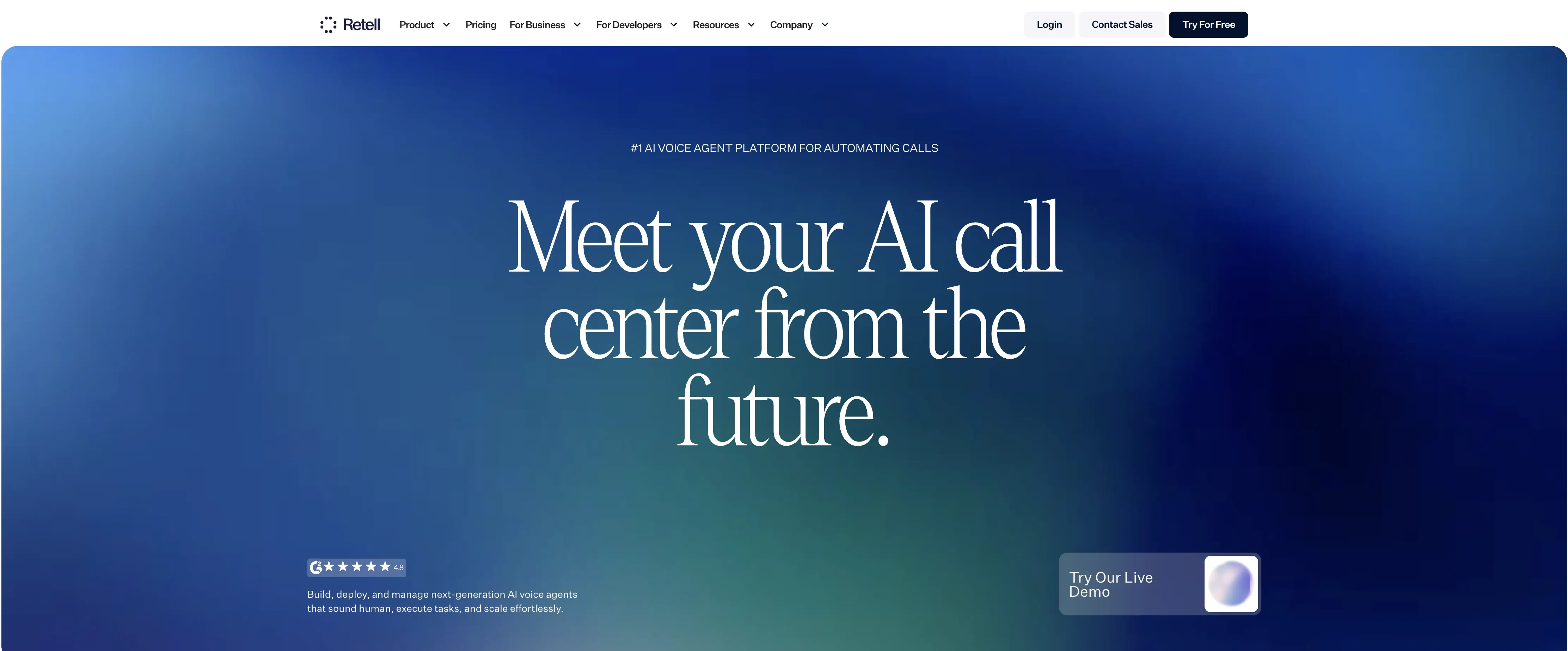
Retell AI is a voice AI platform built for developers. It gives engineering teams a low-latency layer to compose phone agents from modular pieces: speech-to-text (STT), large language model (LLM), text-to-speech (TTS), and telephony. The advertised base rate is around $0.07/min, though real bills land between $0.13 and $0.31/min once you stack the components and add a phone number2. Retell is genuinely good at what it does — natural turn-taking, interruption handling, and granular dialog control. The catch? You need a developer to write the WebSocket logic, configure the tool integrations, and keep it all running in production.
Why people look for Retell AI alternatives
Retell works for technical teams with engineering hours to burn. For everyone else, the cracks tend to show within the first month of pilot. Here are the recurring reasons buyers shop around.
- The setup needs an engineer. Even simple flow edits — a new question in the qualifier, a different way to handle a transfer — usually mean opening a pull request. Operations leads who want to tweak a script before tomorrow's shift end up waiting on developer cycles.
- Pricing is layered, not transparent. Retell's $0.07/min headline rate looks attractive until you add the LLM tokens, the TTS voice, the SIP trunk, and the phone number. Most teams report total spend in the $0.13–$0.31/min range2. Forecasting next quarter's voice budget becomes a math problem.
- No scheduling, no CRM. Retell hands you a phone agent. What happens after the call — booking the meeting, updating the lead in Salesforce, sending a follow-up — is on you to wire up. For SMBs that just want to convert inbound calls into booked meetings, that's a deal-breaker.
- Limited out-of-the-box workflows. You can build almost anything in Retell. You can't pick a template for "AI receptionist for a dental office" and have it live in 30 minutes. Smaller teams typically don't want infinite flexibility — they want a working ai phone agent today.
- Compliance lift sits on you. HIPAA, SOC 2, and GDPR readiness are achievable, but the platform expects you to bring much of the governance scaffolding yourself. Bigger orgs end up budgeting compliance work as a separate project.
- Voice quality depends on what you stack. Because Retell lets you choose your own TTS engine, voice realism varies wildly between deployments. If you don't pick the right voice provider for your use case, callers notice.
If any of those resonate, the rest of this guide will help you map your situation to a better-fit platform.
What to look for in a Retell AI alternative
Before we get to the lineup, here's a short list of evaluation criteria. Use it as a checklist while you read the deep dives.
- Time to live. How fast can a non-developer ship a working agent? The good ones get you live in under an hour. The slower ones need a sprint.
- Pricing transparency. Is the per-minute rate truly all-in, or are there hidden TTS, LLM, and telephony pass-throughs? Predictable bills matter for finance teams modeling growth.
- Integration depth. Does the platform connect natively to your contact management, calendar, helpdesk, and telephony — or do you have to bridge everything through Zapier?
- Scheduling capability. For most SMBs and sales teams, the entire point of voice AI is to book meetings. A Retell AI alternative that can't directly write to a calendar isn't really an alternative — it's half a solution.
- Voice realism and latency. Sub-second response time is table stakes in 2026. Anything slower and callers know they're talking to a bot.
- Compliance posture. SOC 2 Type II, HIPAA, and GDPR should be available without an enterprise upcharge if you're in healthcare, finance, or anywhere with regulated data.
- Support model. White-glove onboarding versus self-serve documentation versus "open a ticket and wait." Match this to your team's bandwidth.
- Outbound vs. inbound balance. Some platforms are tuned for outbound campaigns, others for inbound receptionist work. Pick the one that fits the calls you actually make.
12 best Retell AI alternatives in 2026: at a glance
1. Zeeg — best for SMBs and sales teams that need scheduling + AI voice agent in one place
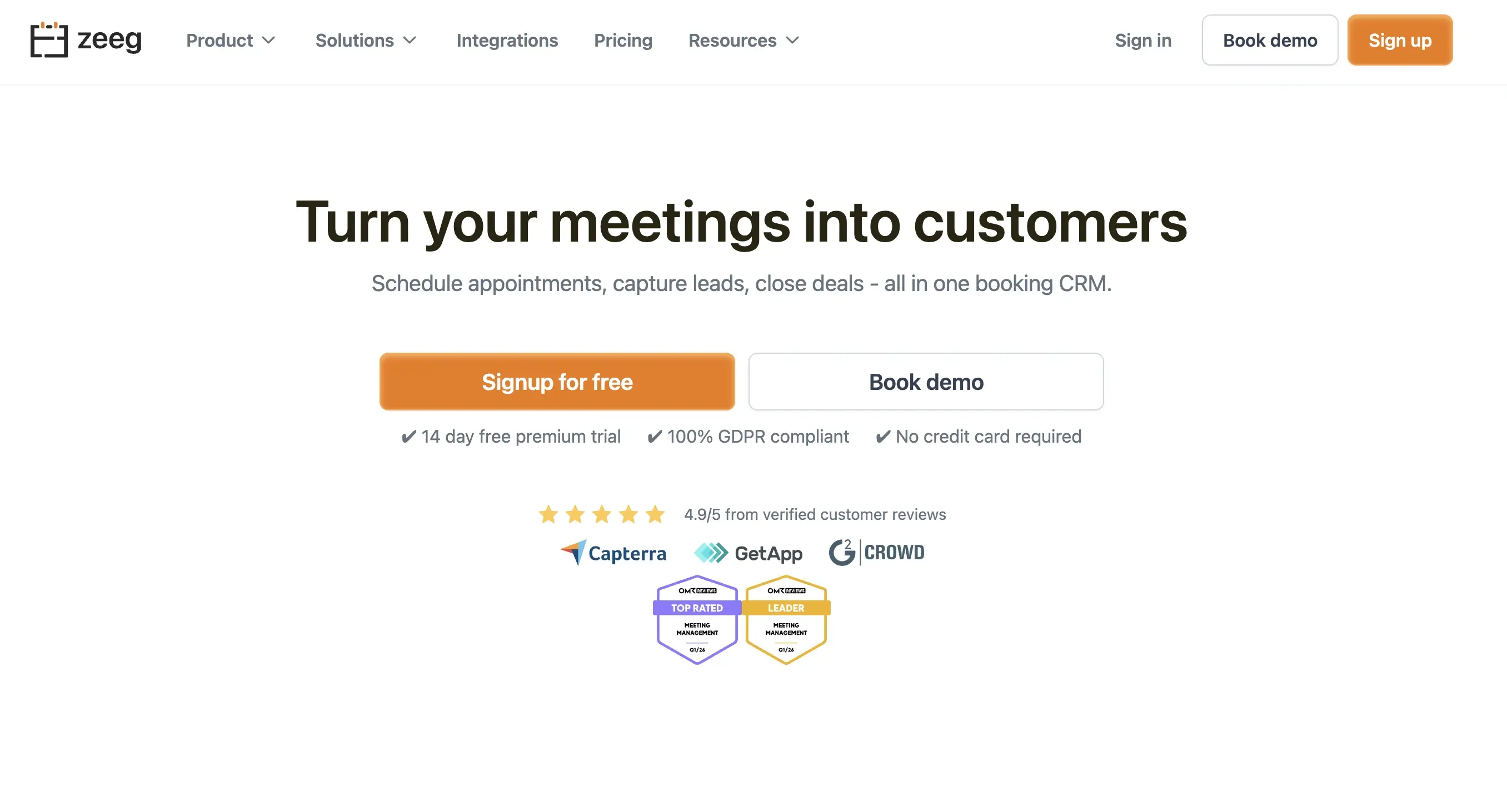
Zeeg is the only platform on this list that combines AI voice agents and a full appointment scheduling system with native contact management in a single product. Most Retell AI competitors hand you a phone agent and stop there. Zeeg picks up the call, qualifies the caller, and writes the booking directly to the calendar — all without a separate scheduling tool, a contact management bridge, or a no-code automation layer holding things together.
That matters for SMBs and sales teams because the typical reason to deploy voice AI is to convert phone traffic into booked time. With Zeeg, an inbound caller can describe what they need, the AI voice agent asks the right qualifying questions, captures contact details, and slots them straight into the right team member's calendar based on routing rules you set in plain language. Outbound flows work the same way in reverse: the agent calls a list of leads, qualifies them, and books the qualified ones.
Key features
- Native AI voice agents for inbound and outbound calls, fully integrated with the calendar
- Smart routing in plain English — "if the caller mentions a new project, book a discovery call" — with multi-team and multi-location support
- Pre-built prompt templates: Appointment Booker, Sales Qualifier, Support Callback
- Choose a new local number in Zeeg from €1.15/month, or import your existing line via SIP trunk and keep your business number
- Call records with full transcripts, post-call email notifications, and automatic contact record updates
- Built-in scheduling pages, routing forms, payments via Stripe and PayPal, and workflow automation
- Test the agent from the browser before publishing
- Fully GDPR-compliant with end-to-end encryption and EU data residency
Pricing
Zeeg has four tiers, and AI voice agents are available from the Professional plan onwards.
- Starter: free forever, for solo users getting started
- Professional: $10/user/month billed annually, $12 monthly. Best for individuals who want advanced scheduling features
- Business: $16/user/month billed annually, $20 monthly. Built for teams that need collaborative scheduling and routing forms
- Scale: $30/user/month billed annually, $40 monthly. For larger orgs with deeper customization needs
Voice minutes use a transparent credit model: ~€0.07/min for inbound calls and ~€0.19/min for outbound, with bundle discounts that bring inbound rates as low as ~€0.11/min3. Every call shows its exact cost in the dashboard.
What users say
Zeeg reviewers on G2 and Capterra consistently call out the same thing: ease of setup compared to Calendly and the depth of features for the price. The scheduling-plus-voice-AI combination is what genuinely differentiates it from both pure scheduling tools (Calendly, Acuity) and pure voice AI tools (Retell, Vapi)4.
Verdict
If your goal is to convert phone calls into booked meetings without stitching three tools together, Zeeg is the most direct fit on this list. It's the only Retell AI alternative built around the scheduling problem rather than the voice infrastructure problem.
Read more about the best AI voice agents for meeting scheduling.
2. Vapi — best for developer teams that want maximum control
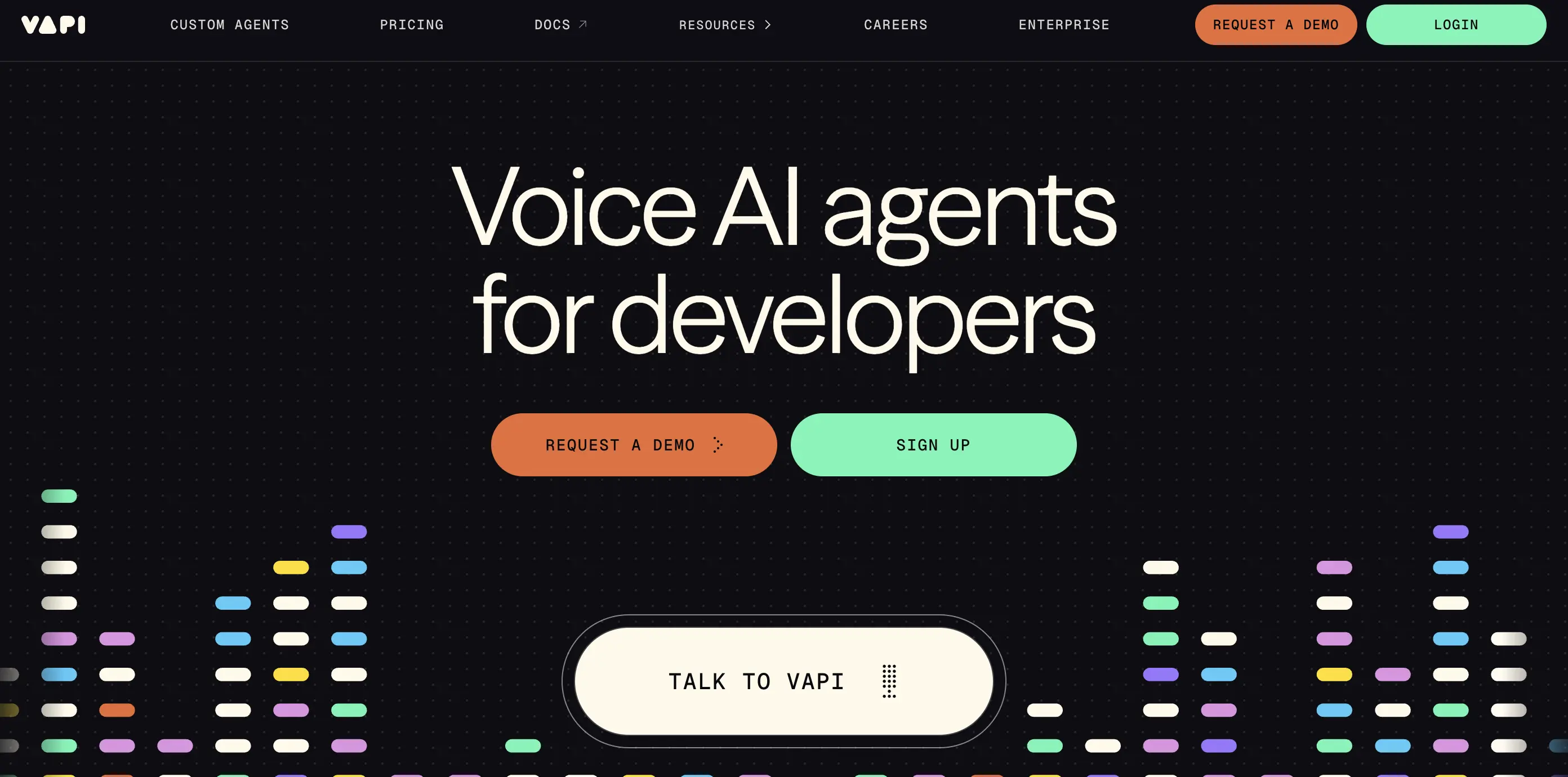
Vapi is the closest architectural cousin to Retell. It's an API-first platform that gives engineering teams full freedom to swap STT, LLM, TTS, and telephony providers, and to compose multi-agent flows. Latency typically sits below 600ms, marginally faster than Retell. The platform added a visual Flow Studio for designing call logic, but the rest still expects developer hands.
Key features
- Bring-your-own-everything: pick OpenAI, Claude, or Gemini for the LLM; ElevenLabs, PlayHT, or Deepgram for voice; Twilio or Telnyx for telephony
- Flow Studio for visual logic with branches, fallbacks, and webhooks
- Multi-agent orchestration so specialized agents can hand off mid-call
- Real-time WebRTC audio streaming with detailed call analytics
Pricing
Vapi uses a transparent usage-based model: $0.05/min Vapi hosting cost (volume discounts available), plus the underlying provider costs for STT, LLM, and TTS5. Once you assemble a working stack, total cost typically lands around $0.13–$0.31/min — almost identical to Retell. Call concurrency runs $10/line per month, with 10 lines included on the pay-as-you-go tier. Enterprise plans use annual contracts with custom pricing.
What users say
Developers love the flexibility and the documentation. Reviews on G2 highlight the ease of iterating on call logic compared to other dev-first platforms6. The most common gripe is invoice complexity — multiple vendor bills, hard to forecast.
Verdict
Vapi is a strong pick if your team has engineering capacity and wants control over every layer of the voice stack. Otherwise, you might a Vapi alternative. For everyone else, the configuration overhead matches Retell's — you've traded one developer dependency for another.
Learn more about AI voice agents pricing.
3. Callers — best for businesses that want fully managed AI customer conversations
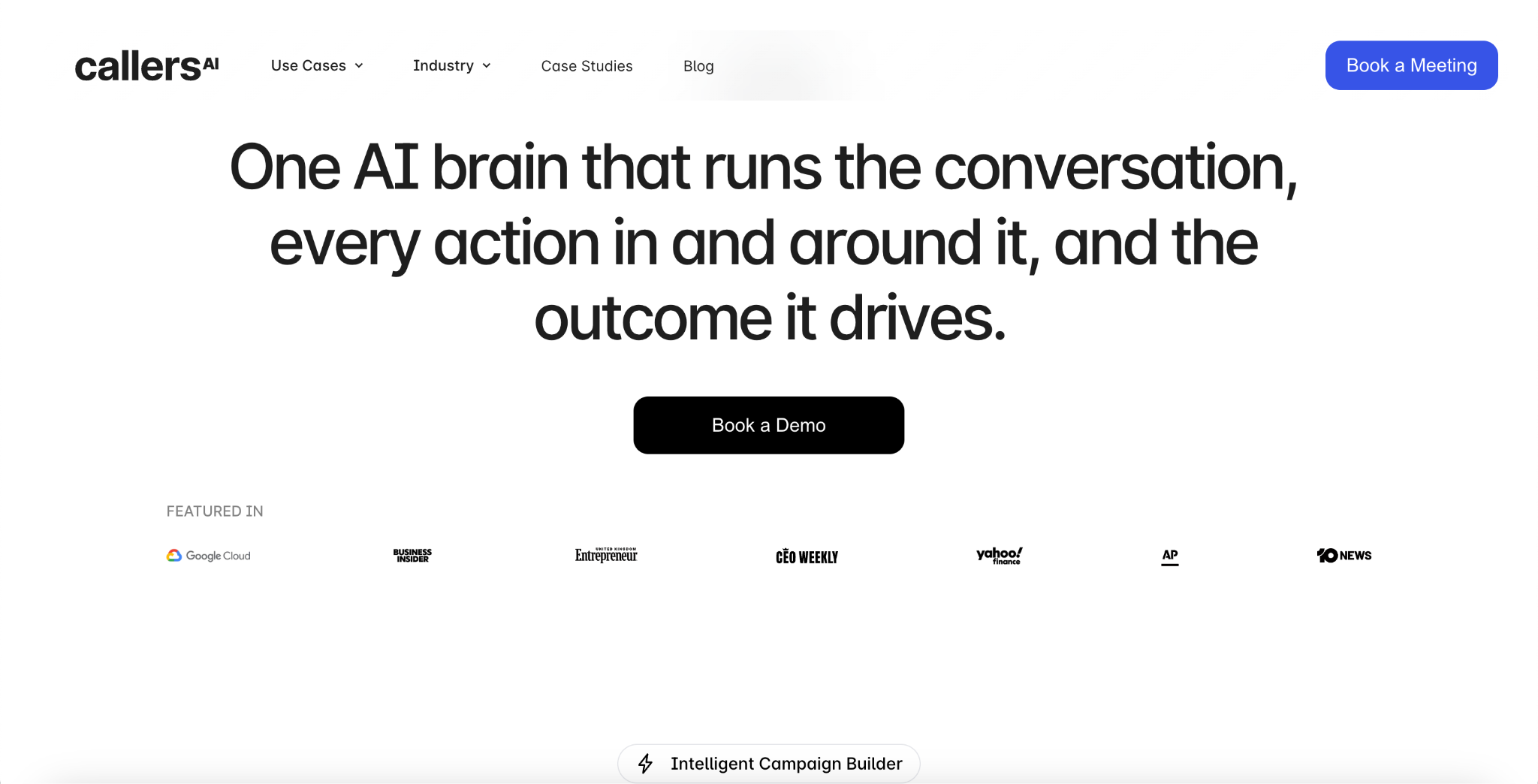
Callers is an AI customer communication platform that automates voice calls, SMS, and email from a single shared context, helping businesses deliver consistent customer experiences across every channel. Unlike developer-first voice platforms, Callers focuses on fast deployment with a managed service, built-in CRM integrations, multilingual AI agents, and campaign optimization. It supports use cases ranging from inbound support and lead qualification to appointment confirmations, retention, and customer re-engagement.
Key features
- Omnichannel AI agents that handle voice, SMS, and email with shared conversation history
- Human-like multilingual voice agents with real-time language switching and emotional responses
- No-code campaign creation using your website, documents, and knowledge base
- Built-in CRM integrations, automated routing, and post-call workflows
- AI-powered conversation analytics with recommendations to improve campaign performance
Pricing
Callers does not publicly list pricing on its website. Businesses need to contact the sales team for a custom quote based on their use case, call volume, and deployment requirements. The platform includes managed onboarding and implementation rather than a self-service pricing model.
What users say
Customer testimonials highlight faster deployment, reduced call center workload, higher appointment volumes, and improved outbound efficiency. Companies featured on the website report measurable improvements in lead engagement, operational efficiency, and customer response rates after adopting the platform.
Verdict
Callers is a strong choice for organizations that want AI-powered customer communication without building and maintaining their own voice stack. Its managed deployment, omnichannel capabilities, and broad range of customer engagement workflows make it particularly attractive for sales, customer support, healthcare, insurance, and other high-volume service teams. Teams seeking deep API-level customization may prefer developer-focused platforms, but businesses prioritizing speed to deployment and operational simplicity will find Callers a compelling alternative.
4. Bland AI — best for high-volume outbound campaigns
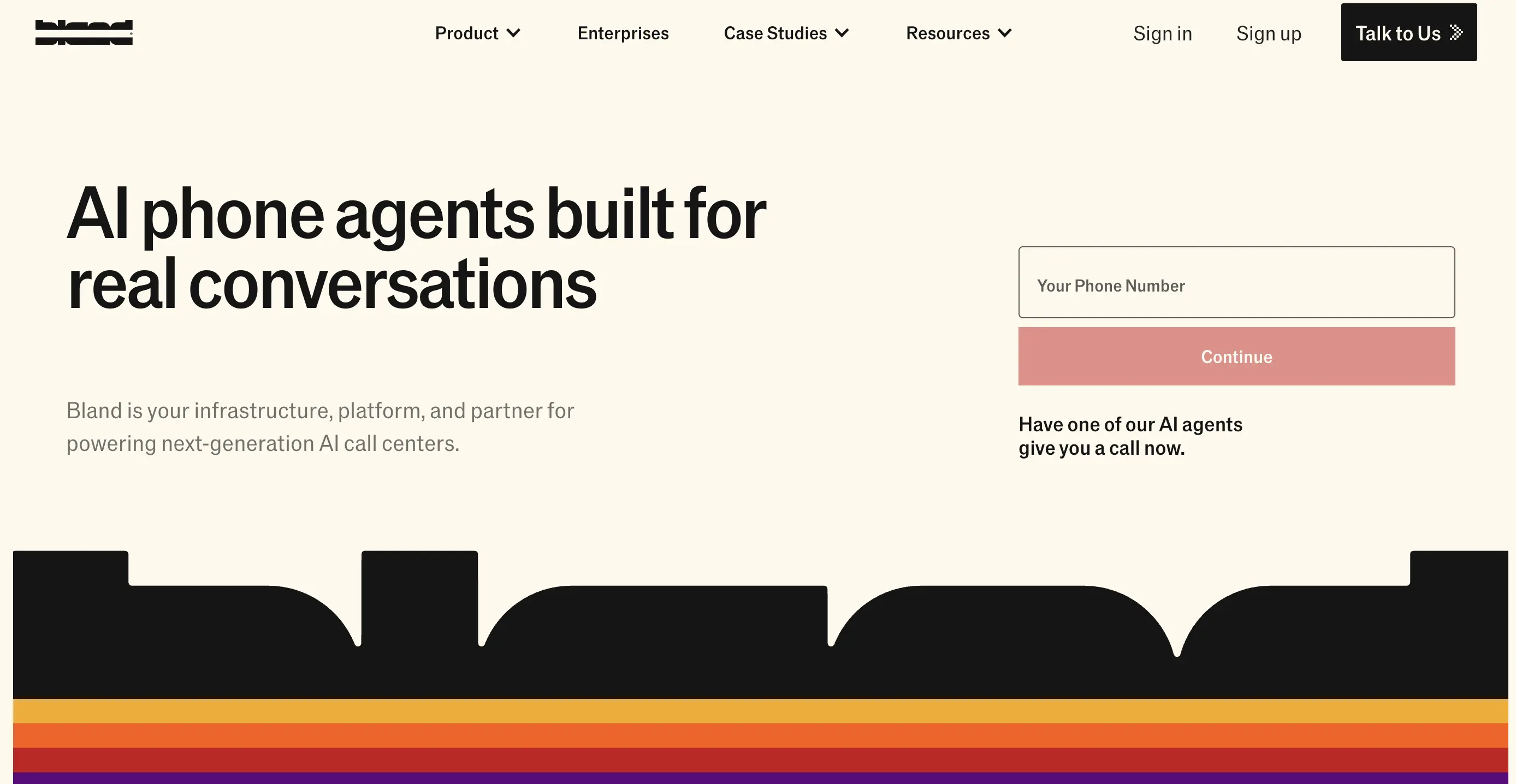
Bland positions itself for teams running massive outbound calling — up to 20,000 calls per hour according to its enterprise tier. The platform leans into voice cloning, conversational pathways (a visual node-based logic builder), and SOC 2 / HIPAA certifications baked in.
Key features
- Visual conversational pathways with conditional branching
- Voice cloning across multiple voice models
- Up to 20,000 calls/hour at enterprise scale
- Memory layer that lets the agent reference prior calls in a thread
Pricing
Bland uses a flat per-minute model with two team tiers and a custom Enterprise plan7. The Build plan is $0.12/min connected with a $299/month platform fee, includes 50 concurrent calls, 2,000 calls/day, and 5 voice clones. The Scale plan is $0.11/min connected with a $499/month platform fee, includes 100 concurrent calls, 5,000 calls/day, 15 voice clones, and priority infrastructure for production workloads. Enterprise customers get volume discounts on the flat per-minute rate alongside dedicated infrastructure, custom voice actors, and 24/7 support.
What users say
Reviews highlight reliability under heavy load and the conversational pathways builder. Recurring complaints: latency around 800ms (slower than the field average), unpredictable scripted-vs-dynamic switching, and feature stability issues during rapid product iterations8.
[SCREENSHOT: Bland AI G2 review]
Verdict
Bland is a fit if you're running outbound campaigns at the tens-of-thousands-of-calls-per-day scale. For inbound receptionist work or smaller teams, the per-call minimums and developer-first setup make it heavier than necessary.
5. Synthflow — best no-code voice AI for non-technical teams
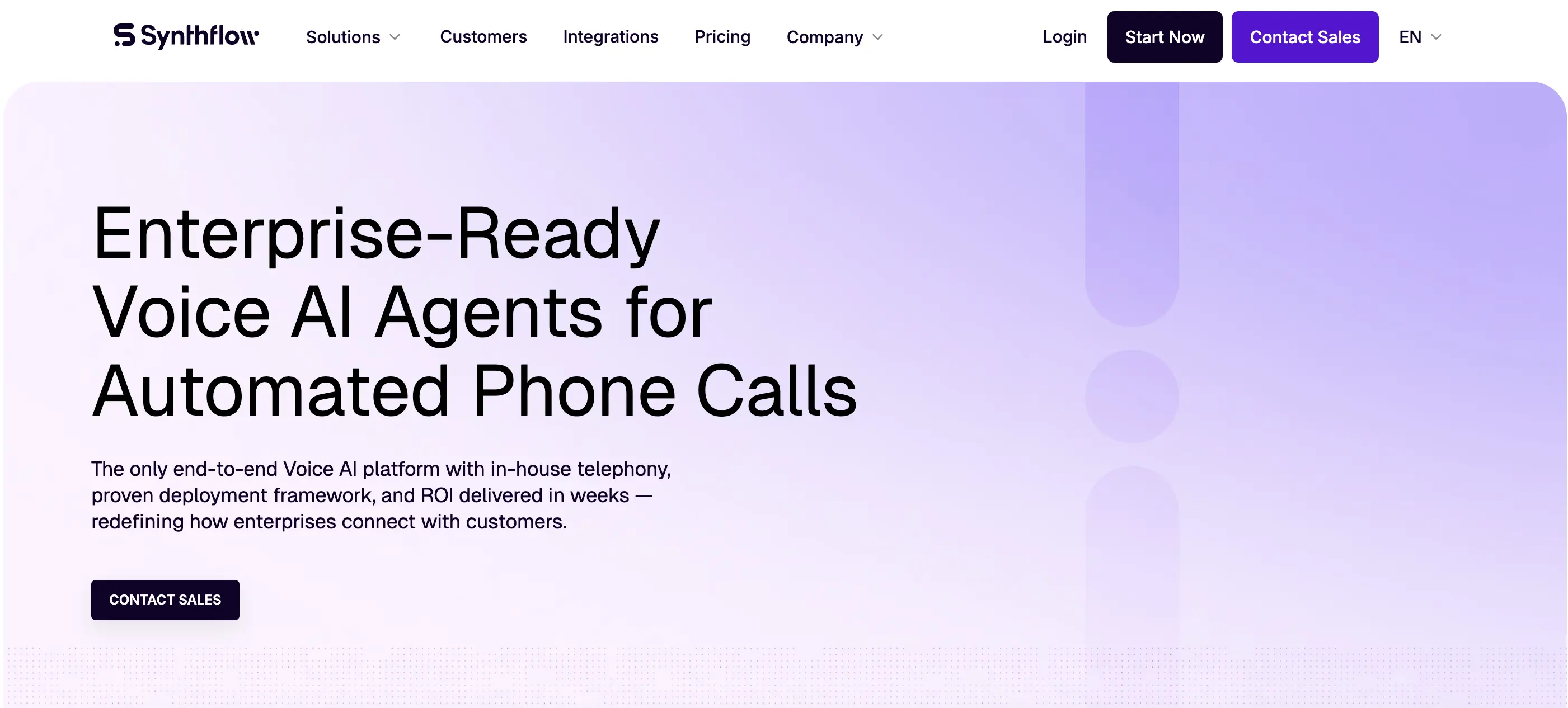
Synthflow markets itself as the no-code Retell AI alternative. Its drag-and-drop builder, pre-built templates, and bundled per-minute pricing remove most of the engineering lift. The trade-off is less granular control than Vapi or Retell once you push beyond the templates.
Key features
- Drag-and-drop visual flow builder
- Sub-400ms latency thanks to in-house Elastic SIP infrastructure
- Over 200 native integrations including HubSpot, Salesforce, monday.com, and Stripe
- Voice cloning across 50+ languages
Pricing
Synthflow recently moved to a Pay-as-you-go model: start at $0, then pay only for what you use as you scale9. The pay-as-you-go tier includes free-to-start access, native Synthflow Twilio telephony or bring-your-own, 5 concurrent calls (then $20 per reserved concurrency), and SOC 2 / GDPR / ISO 27001 compliance. The Enterprise tier is purpose-built for teams handling 10,000+ minutes/month and includes a 99.99% uptime SLA, native SIP trunking, white-label and reseller toolkit, unlimited concurrent calls, custom workflows, and custom API rate limits.
What users say
Reviewers credit Synthflow with the fastest no-code path to a live agent. Common frustrations: usage costs that climb fast at scale, occasional voice realism issues for non-English calls10.
Verdict
For agencies and SMBs that want voice AI without writing a line of code, Synthflow is one of the cleaner picks. It's still a voice-only tool, though — you'll need a separate scheduling and CRM stack alongside it.
[SCREENSHOT: PolyAI homepage]
6. PolyAI — best enterprise-grade voice realism
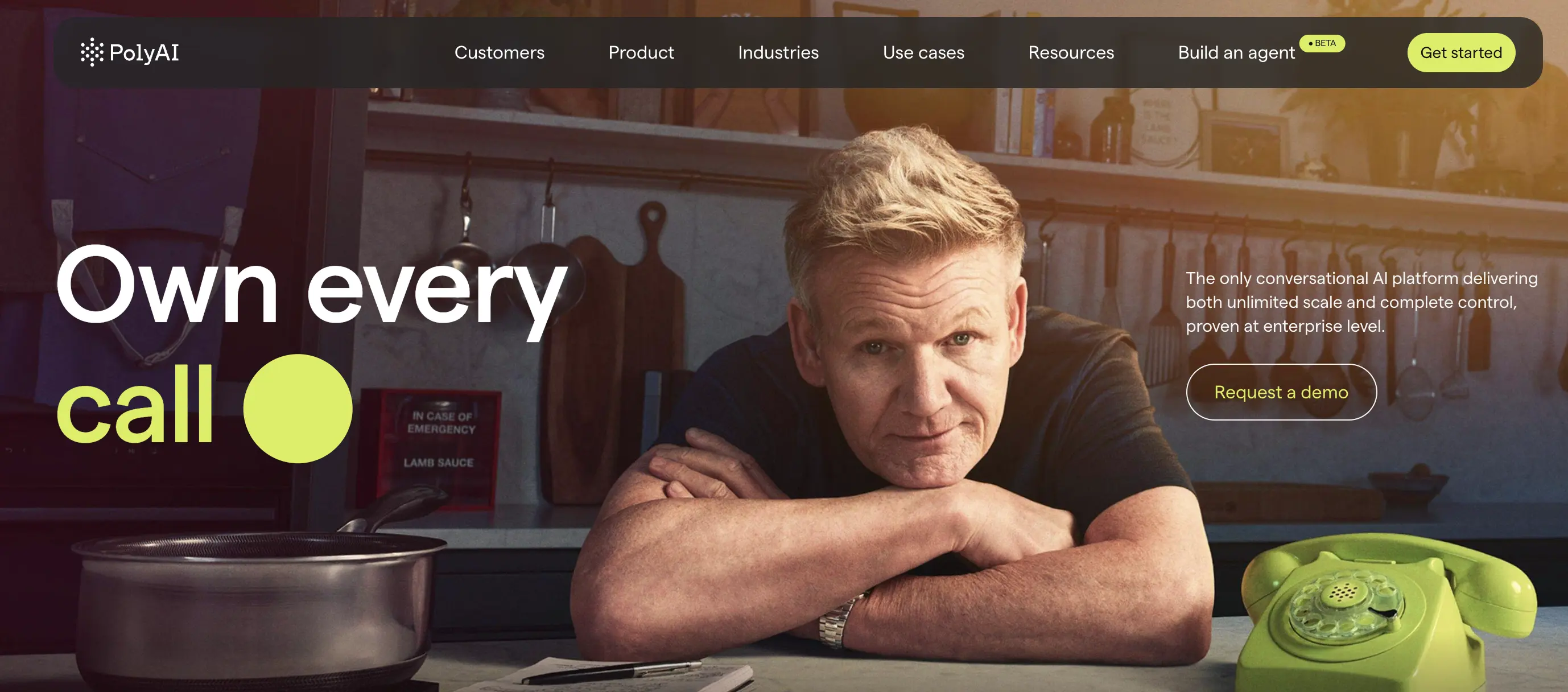
PolyAI built its reputation on conversation quality. The voices are among the most natural in the field, and the platform handles complex contact-center call flows at high volume. It's a managed enterprise product, not a self-serve tool — every deployment runs through their professional services team.
Key features
- Proprietary voice models with industry-leading realism
- Multilingual support across dozens of languages and regional accents
- Native integrations with Twilio Flex and major CCaaS platforms
- Enterprise governance: SSO, audit trails, role-based access
Pricing
PolyAI uses custom enterprise contracts based on call volume, integration scope, and SLAs. Public pricing isn't listed; expect a discovery call before any numbers11.
What users say
G2 and Capterra reviewers describe the voice quality as the closest thing to a human agent currently available. The most common pushback is implementation timeline — three to six months is typical, longer than self-serve alternatives12.
[SCREENSHOT: PolyAI G2 review]
Verdict
PolyAI is the right answer for large contact centers where voice quality directly affects brand perception and CX scores. For smaller orgs, the procurement cycle and enterprise pricing are overkill.
7. ElevenLabs Conversational AI — best for voice quality on a self-serve plan
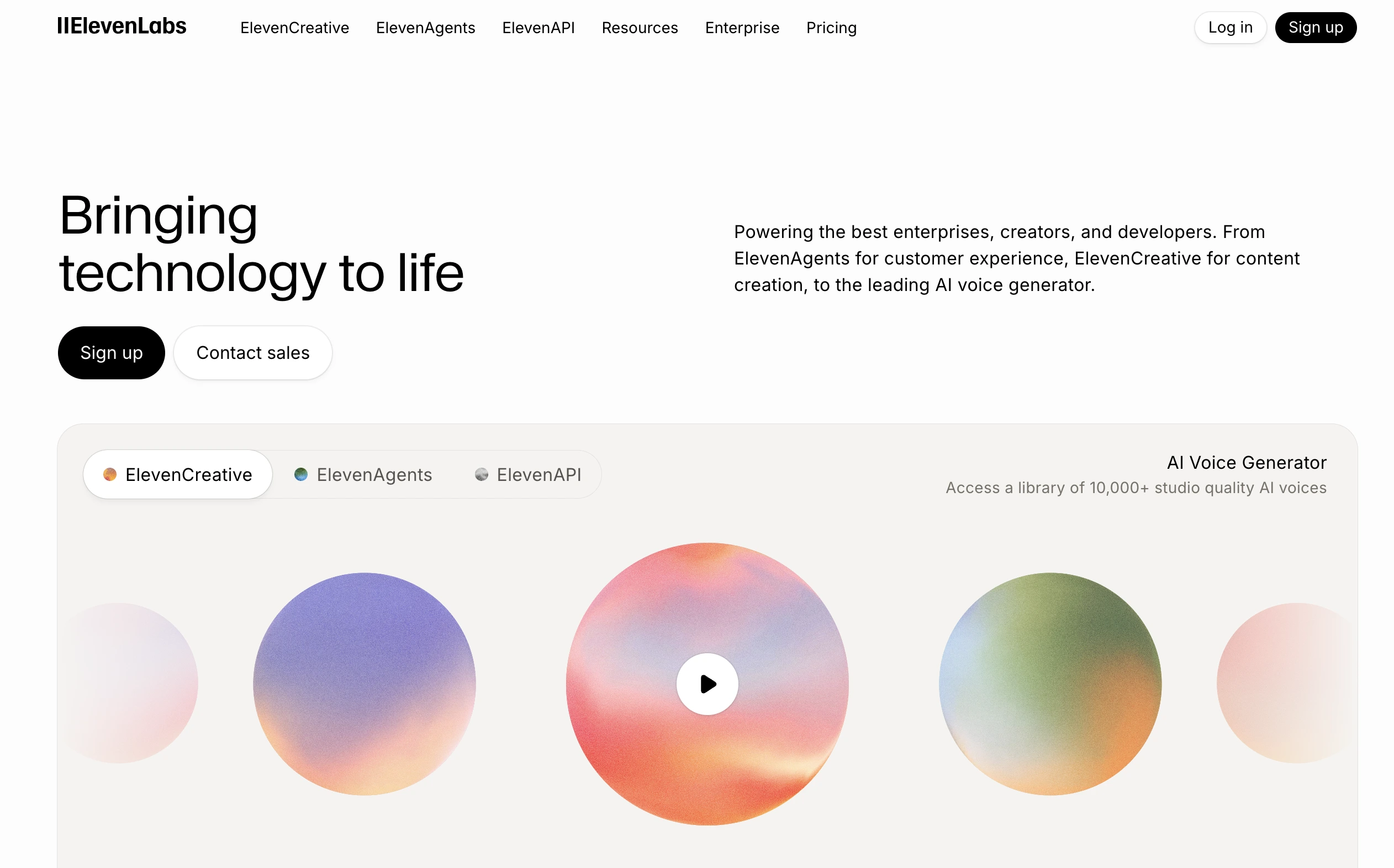
ElevenLabs Conversational AI extends the voice generation company's premium TTS into a full agent platform. The agents inherit ElevenLabs' speech quality, which is the strongest reason to pick it. Conversation orchestration, interruption handling, and multilingual support (31 languages) come standard.
Key features
- Premium TTS with emotional tonality and expressive cadence
- Native Twilio integration plus webhook support for CRM mid-call actions
- 31 languages out of the box
- SDKs for Python, JavaScript, React, and Swift
Pricing
ElevenLabs offers four self-serve tiers: Free at $0, Starter at $6/month, Creator at $11/month (the most popular plan), and Pro at $99/month. Conversational AI usage runs $0.12/min beyond included minutes, with concurrency limits ranging from 4 to 30 sessions depending on the tier. Enterprise plans are available for higher volume13.
What users say
Reviews point to two things: the voice quality (universally praised) and the credit-based billing (universally confusing). Some operators report cost spikes when peak call volume converts credits faster than expected14.
Verdict
If voice realism is the dominant factor in your decision and you don't need deep workflow logic, ElevenLabs is hard to beat. For complex routing or scheduling, you'll outgrow it.
8. Sierra AI — best for outcome-based pricing in large enterprises

Sierra is the high-end CX platform on this list. Its pitch is outcome-based billing: you pay when an AI agent successfully resolves a customer interaction, not for every minute of conversation. The platform was co-founded by ex-Salesforce leadership and targets organizations that treat customer experience as a top-line investment.
Key features
- Multi-LLM orchestration with policy guardrails
- Native CRM, OMS, and backend system integrations for action execution
- Outcome-based billing tied to resolution metrics
- Brand-aligned voice agents that represent your tone across every interaction
Pricing
Custom enterprise contracts. Public reports suggest deployments typically start in the high five figures and can climb into the low hundreds of thousands annually depending on scope15.
What users say
G2 reviewers report excellent conversation depth and resolution rates, especially for retail and consumer brands. The most cited limitation is the build cycle — Sierra deployments are professional-services projects, not weekend installs16.
Verdict
Sierra is the right call for enterprises that want voice AI as a strategic CX investment, with vendor incentives aligned to outcomes. Anyone smaller will find it operationally heavy and financially overscoped.
9. Voiceflow — best for conversation design teams
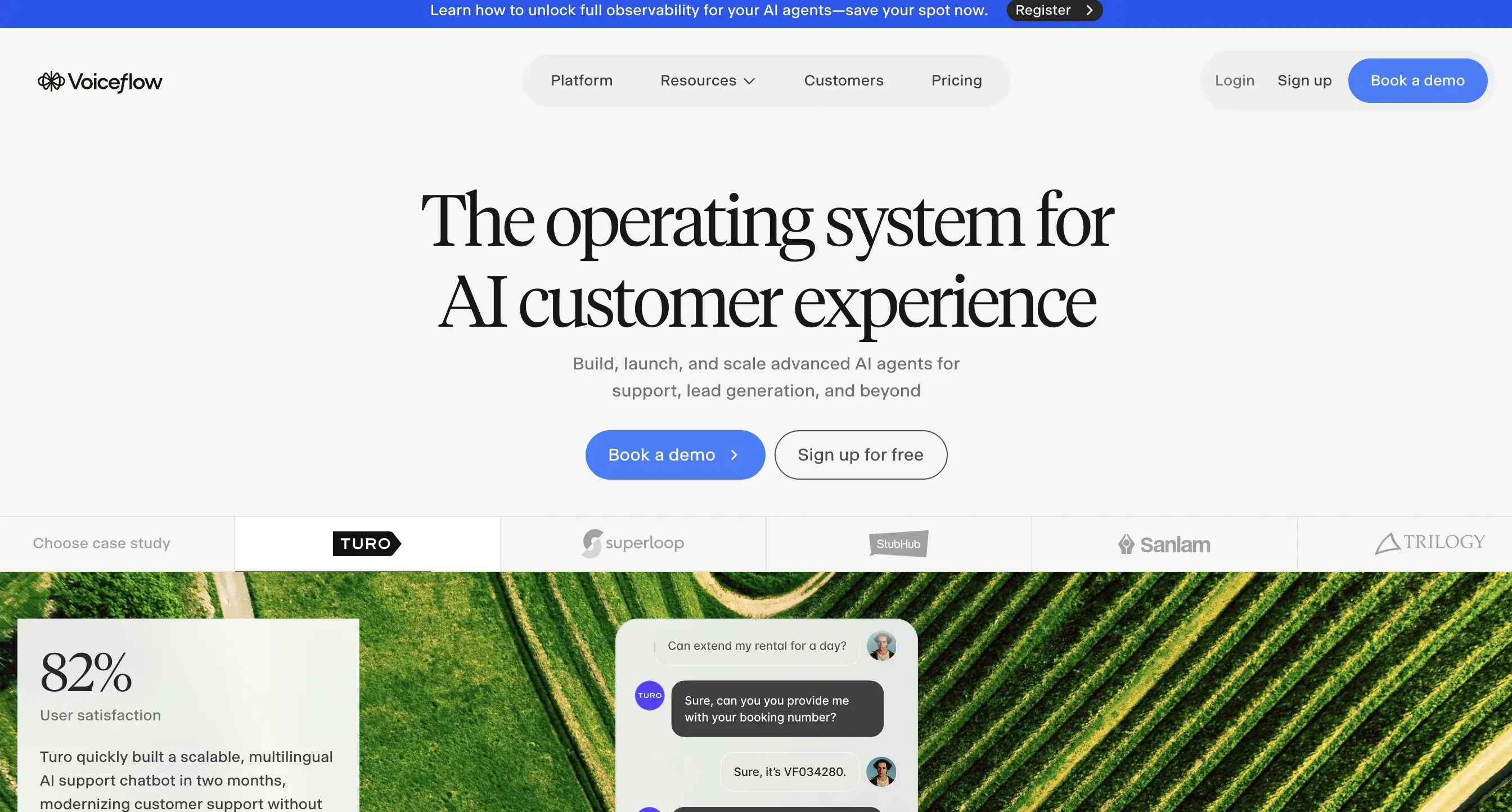
Voiceflow started life as a conversation design tool and has since added runtime capabilities. It's still the strongest choice on this list for teams that want to prototype, test, and collaborate on conversation flows before shipping. Voice handoff to telephony usually requires a separate provider.
Key features
- Visual canvas for collaborative flow design with version history
- Knowledge base ingestion for RAG-powered responses
- Multi-channel deployment across voice, chat, and digital
- Strong testing and prototyping tools for cross-functional teams
Pricing
Voiceflow has moved to a transparent usage-based billing model with two tracks17. Agencies and partners get a free trial with no credit card required, multi-client workspace management, white-labeling tools, and access to all major model providers — then pay only for what they use as they scale clients. Businesses get implementation support (self-serve or fully managed), real-time observability, and unlimited control over agent details — also on usage-based billing. Specific per-tier pricing isn't published; both tracks require contacting sales for a quote.
[SCREENSHOT: Voiceflow G2 review]
What users say
Designers and product managers love Voiceflow's UX. The two recurring complaints: runtime credit costs add up faster than expected at scale, and the platform is more about designing flows than running them in production telephony18.
Verdict
Pick Voiceflow if you have a conversation design team that needs a shared canvas to prototype agents. For pure execution at scale, pair it with another runtime or look elsewhere.
10. NiCE Cognigy — best for omnichannel enterprise automation
NiCE Cognigy (rebranded after NICE acquired Cognigy) is a full conversational AI platform spanning voice, chat, SMS, and digital channels. Its enterprise focus means strong governance, multi-LLM orchestration, and a visual agent studio that gives ops teams real authoring power without leaning entirely on engineering.
Key features
- Omnichannel by default — voice, chat, messaging, and digital in one studio
- LLM orchestration across OpenAI, Anthropic, AWS Bedrock, and others
- Real-time agent assist alongside fully automated agents
- Enterprise compliance: GDPR, SOC 2, HIPAA-capable deployments
Pricing
Enterprise pricing scaled to user seats, conversations, and feature tiers. Discovery call required19.
What users say
NiCE Cognigy reviewers consistently call out the depth of the visual builder and the omnichannel handoff between voice and digital. Pushback centers on the learning curve and total cost for smaller teams20.
Verdict
NiCE Cognigy fits enterprises running unified voice and digital automation with internal governance requirements. It's overpowered for SMBs that just want a phone agent that books meetings.
11. Goodcall — best for solo operators and very small businesses
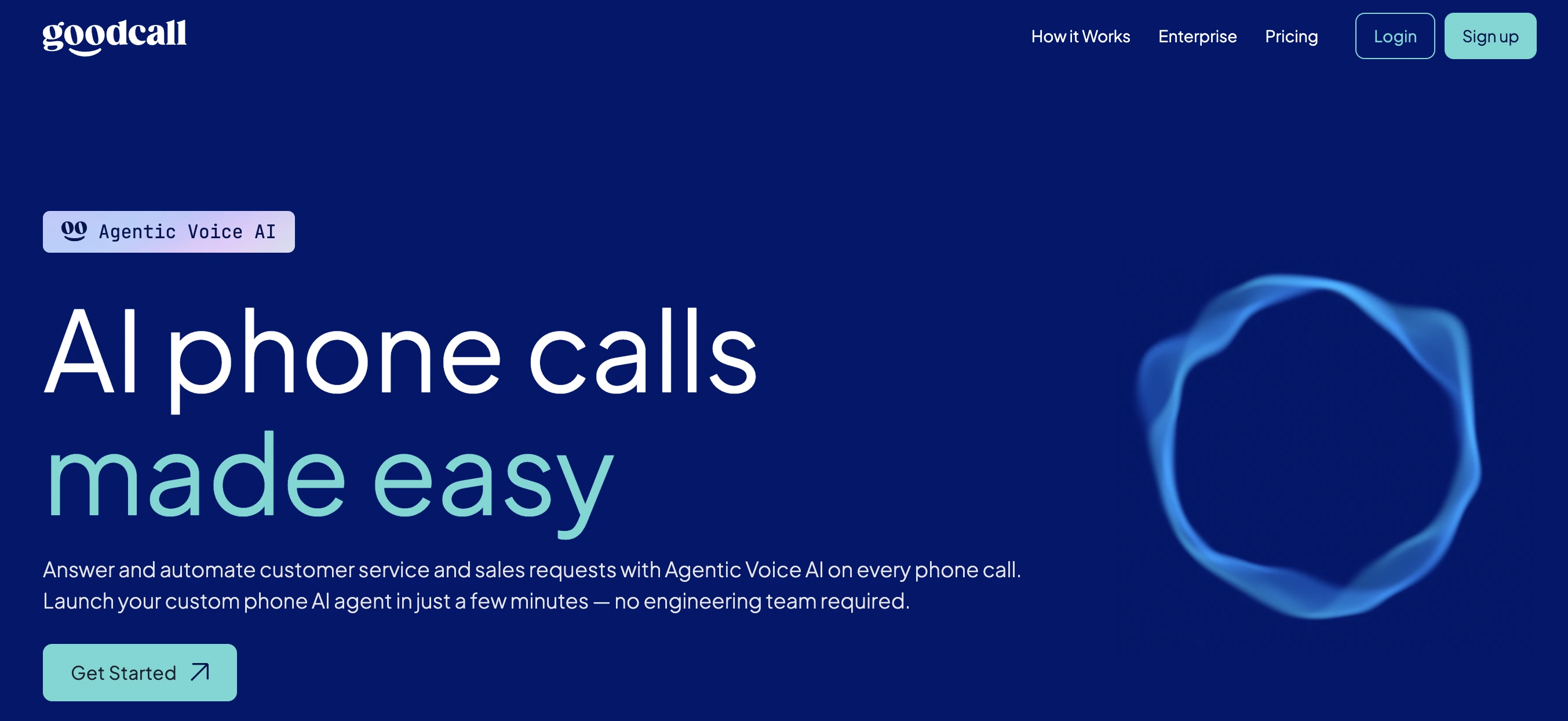
Goodcall is the lightest tool on this list. It's a no-code AI receptionist for small businesses — local services, single-location practices, solo consultants — that need a phone to be answered while they're busy. It won't run a contact center, and that's the point.
Key features
- Truly no-code setup with prebuilt small-business templates
- Google Calendar integration for basic appointment booking
- Voicemail capture and call forwarding
- Simple analytics for call volume and outcomes
Pricing
Goodcall has three per-agent tiers on annual billing, plus a custom Enterprise plan21. Starter runs $66/month annually ($79 monthly), with 1 logic flow, 3 team members, and 100 unique customers monthly. Growth at $108/month annually ($129 monthly) is the most popular tier and adds 3 forms, 3 logic flows, 9 team members, and 250 unique customers monthly. Scale at $208/month annually ($249 monthly) covers 25 logic flows, 50 team members, and 500 unique customers monthly. Enterprise plans add custom integrations, SLA, and dedicated onboarding.
What users say
Small-business reviewers love the time-to-value: live in 15 minutes, no developer needed. The recurring complaint is the customization ceiling — once you outgrow the templates, you'll hit walls fast22.
Verdict
Goodcall is the right entry point for one-person operations or very small teams. As soon as you need round-robin routing, multi-team rules, or CRM integration, you'll move on.
12. Replicant — best for resolution-first contact centers
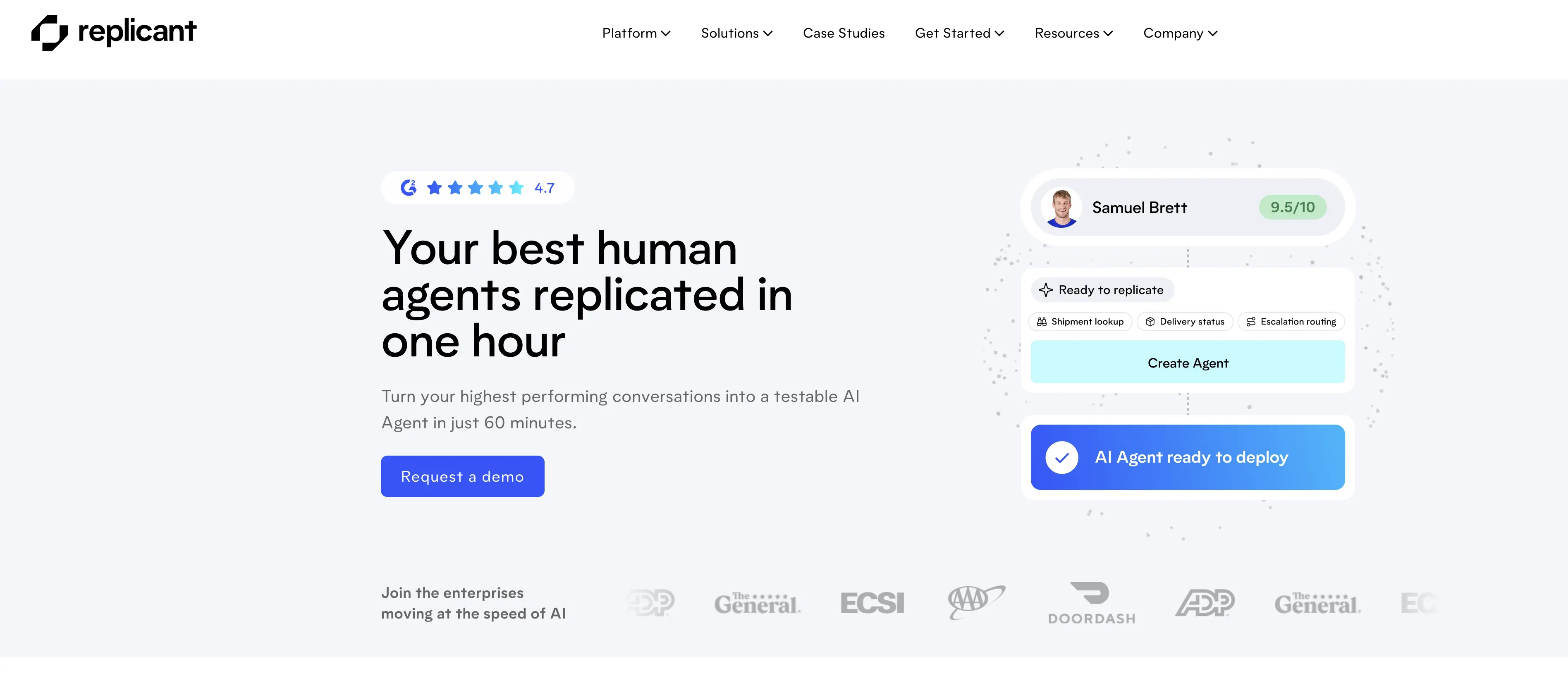
Replicant calls itself a "resolution-first" platform — every metric is tied to whether the AI actually closed the customer's issue, not whether the call lasted X minutes. It targets enterprise contact centers, especially in retail and consumer services, with long-call-flow automation and detailed analytics.
Key features
- Resolution-rate dashboard tied to outcomes, not call volume
- Multi-language support across major regions
- Deep CCaaS integrations for handoff to human agents
- Enterprise compliance and security standards
Pricing
Pay-as-you-go enterprise model. Pricing depends on volume, languages, and integration scope; not publicly listed23.
What users say
G2 and Trustpilot reviews single out the analytics depth and the focus on measurable outcomes. The trade-off is a longer onboarding cycle — typical deployments run weeks to months24.
Verdict
Replicant is well suited to mid-to-large contact centers where resolution KPIs already drive performance reviews. For teams just starting with voice AI, it's a heavyweight pick.
How to choose your Retell AI alternative
The right tool depends on what kind of team you are and what calls you actually want to automate. Here's a quick decision guide based on the eleven options above.
If you're an SMB that wants inbound calls converted into booked meetings: Zeeg. It's the only platform on this list with a native scheduling layer, so the agent doesn't just qualify the caller — it books the time directly.
If you're a sales team running outbound qualification: Bland AI for sheer volume; Zeeg if you need the booked meetings to land in calendars and contact records automatically; Synthflow for non-technical teams that want a quick build.
If you're a developer-led team building a custom voice product: Vapi or Retell itself. Both give you the granular control. Pick Vapi if you want marginally better latency; pick Retell if you've already invested in its WebSocket model.
If you're an enterprise contact center prioritizing voice realism: PolyAI for caller experience; Sierra for outcome-aligned pricing; Replicant for resolution-rate accountability.
If you need omnichannel automation across voice and chat: NiCE Cognigy for the breadth and the visual studio.
If voice quality is the dominant factor and your flows are simple: ElevenLabs Conversational AI on a self-serve plan.
If you're a conversation design team that wants a shared canvas: Voiceflow.
If you're a one-person business that needs the phone answered: Goodcall.
For most SMBs and sales teams reading this, the choice usually narrows to Zeeg, Synthflow, or Bland — depending on how much of the post-call workflow (scheduling, contact management, follow-up) you want the platform to own.
[CTA: Stop missing calls. Start booking meetings — try Zeeg's voice AI free → https://zeeg.me/en/pricing]
Why Zeeg stands out as a Retell AI alternative
Most Retell AI alternatives compete on the same axis: voice infrastructure. They argue over latency, voice realism, and how many providers you can bring into the stack. That's a real debate, but it misses the question most SMBs are actually asking — how do I turn phone calls into revenue without hiring a receptionist or paying for three separate tools?
Zeeg answers that directly. Instead of being one more voice infrastructure layer, it's a complete solution with AI call handling, advanced scheduling features and contact management features. Calls flow into the same calendar, contacts, routing rules, and workflow automations the rest of the team already uses. There's no gluing a Vapi agent to Calendly through Zapier and hoping the booking confirmation lands in the right inbox.
Here's how the two platforms actually compare on the criteria that matter for SMBs:
A few practical differentiators worth flagging:
- You keep your phone number. Zeeg supports SIP trunk import, so the existing business line stays live. No callers ever notice the change.
- Routing reads like English. Instead of WebSocket logic, the routing rules look like "if the caller mentions a new project, book a discovery call with the sales team." Ops can edit them without filing a ticket.
- Call costs are visible per call. Every call shows its exact cost in credits inside the dashboard. No end-of-month surprise from layered TTS, LLM, and telephony bills.
- Scheduling is the destination, not an afterthought. Booking pages, routing forms, buffer times, and team availability rules already exist in Zeeg. The voice agent simply uses them — it doesn't have to recreate them.
- It's built in Europe, fully GDPR-compliant. Data stays on EU servers with end-to-end encryption. For US teams that work with European customers, that's a useful default.
Frequently asked questions
Is Retell AI worth using in 2026?
Retell AI is worth using if you have an engineering team that wants modular, low-latency voice infrastructure and the time to assemble it. For ops-led teams who want a working ai phone agent today, most Retell AI alternatives ship faster.
What is the cheapest Retell AI alternative?
On a flat per-minute basis, Synthflow's Pay-as-you-go (start at $0) is the lowest barrier to entry, while Bland AI's $0.11–$0.12/min connected rates remain among the leanest published prices for high volume. On a total-cost-of-ownership basis, Zeeg often comes out cheaper for SMBs because it includes scheduling, contact management, and workflow automation — capabilities that would otherwise be three separate subscriptions.
Which Retell AI alternative is easiest for non-developers?
Synthflow, Goodcall, and Zeeg are the three most accessible no-code options. Zeeg is the right pick if your goal is to book meetings; Synthflow if you want a generalist voice agent with broad integrations; Goodcall if you're a single-location small business.
Can a Retell AI alternative book meetings directly into a calendar?
Most can't natively — they expose an API you're expected to wire to your scheduling tool yourself. Zeeg is the exception, since the calendar is part of the same product.
What's the typical voice AI agent cost in 2026?
Most platforms land between $0.08 and $0.31 per minute when you include all components (TTS, LLM, telephony). Some, like Sierra, charge per resolved interaction rather than per minute. The full breakdown lives in Zeeg's voice agent pricing guide.
Are these Retell AI alternatives GDPR-compliant?
Compliance varies. Zeeg, NiCE Cognigy, and PolyAI offer GDPR readiness as a default. Synthflow and Sierra include it on enterprise tiers. For Retell, Vapi, and Bland, GDPR conformity usually involves an additional contract or compliance add-on.
How long does it take to deploy a voice AI agent?
On no-code platforms (Zeeg, Synthflow, Goodcall), 30 minutes to a few hours. On developer-first platforms (Retell, Vapi, Bland), days to weeks depending on integration scope. Enterprise platforms (Sierra, PolyAI, Replicant) typically run weeks to months.
Sources
- Market.us — Voice AI Agents Market Size, Share | CAGR of 34.8%
- Retell AI — AI Phone Agent Pricing
- Zeeg — Pricing
- G2 — Zeeg reviews
- Vapi — Pricing
- G2 — Vapi reviews
- Bland AI — Pricing
- G2 — Bland AI reviews
- Synthflow — Pricing
- G2 — Synthflow reviews
- PolyAI — Solutions
- G2 — PolyAI reviews
- ElevenLabs — Pricing
- G2 — ElevenLabs reviews
- Sierra — Voice product
- G2 — Sierra reviews
- Voiceflow — Pricing
- G2 — Voiceflow reviews
- NiCE Cognigy — Pricing
- G2 — NiCE Cognigy reviews
- Goodcall — Pricing
- Capterra — Goodcall reviews
- Replicant — Platform
- G2 — Replicant reviews
Zeeg is Europe's leading AI voice agent and appointment scheduling software in one solution — GDPR-compliant, made in Germany. Start for free →
Frequently Asked Questions
How long does it take to deploy a voice AI agent?
On no-code platforms (Zeeg, Synthflow, Goodcall), 30 minutes to a few hours. On developer-first platforms (Retell, Vapi, Bland), days to weeks depending on integration scope. Enterprise platforms (Sierra, PolyAI, Replicant) typically run weeks to months.
Are these Retell AI alternatives GDPR-compliant?
Compliance varies. Zeeg, NiCE Cognigy, and PolyAI offer GDPR readiness as a default. Synthflow and Sierra include it on enterprise tiers. For Retell, Vapi, and Bland, GDPR conformity usually involves an additional contract or compliance add-on.
What's the typical voice AI agent cost in 2026?
Most platforms land between $0.08 and $0.31 per minute when you include all components (TTS, LLM, telephony). Some, like Sierra, charge per resolved interaction rather than per minute.
Can a Retell AI alternative book meetings directly into a calendar?
Most can't natively — they expose an API you're expected to wire to your scheduling tool yourself. Zeeg is the exception, since the calendar is part of the same product.
Which Retell AI alternative is easiest for non-developers?
Synthflow, Goodcall, and Zeeg are the three most accessible no-code options. Zeeg is the right pick if your goal is to book meetings; Synthflow if you want a generalist voice agent with broad integrations; Goodcall if you're a single-location small business.
What is the cheapest Retell AI alternative?
On a flat per-minute basis, Synthflow's Pay-as-you-go (start at $0) is the lowest barrier to entry, while Bland AI's $0.11–$0.12/min connected rates remain among the leanest published prices for high volume. On a total-cost-of-ownership basis, Zeeg often comes out cheaper for SMBs because it includes scheduling, contact management, and workflow automation — capabilities that would otherwise be three separate subscriptions.
Is Retell AI worth using in 2026?
Retell AI is worth using if you have an engineering team that wants modular, low-latency voice infrastructure and the time to assemble it. For ops-led teams who want a working AI phone agent today, most Retell AI alternatives ship faster.