How to Qualify Inbound Leads: 7 Proven Strategies


Just a guess: you're starting (or planning) to generate more inbound leads, and you want them to become paying customers. Close enough? Then you should know this: while attracting potential buyers to your business is important, knowing how to qualify inbound leads is what can make a real impact. There’s a big difference between time spent on leads that don’t convert, and closed deals.
In this guide, we'll walk through everything you need to know about inbound lead qualification—from understanding what makes a quality lead to implementing systems that help your team focus on prospects most likely to convert. We'll also explore how Zeeg can streamline your qualification process — from smart booking forms to an AI Agent that qualifies leads over the phone automatically, even outside business hours.
What is an inbound lead?
An inbound lead is that prospect that initiates contact with your business after find your business. Unlike outbound leads (where you reach out first), inbound leads have already shown interest in your product or service by taking some action—whether downloading some of your content, signing up for a newsletter, requesting a demo, booking a meeting, or contacting your sales team directly.
Basically, the action came from them (even though they might be a result of your marketing strategy).
Another interesting fact that you should know is that inbound leads generally convert at higher rates than outbound leads, which shows how important they are. It might sound obvious, but it’s important to stress. And it happens so because:
- They've already demonstrated interest in your offering
- They're typically further along in their buyer's journey
- They enter your sales process with higher trust levels
- They require less convincing about their problems and your solutions
Inbound vs. outbound leads: Understanding the differences
To better understand the value of inbound lead qualification, let’s contrast inbound leads with outbound:
While both types of leads should have their place in your marketing strategy, inbound leads often provide better potential to convert. And the better inbound lead qualification you use, the more this potential you’ll realize.
The difference between inbound leads and qualified prospects
Not all inbound leads are created equal, and that’s why there’s a difference between an inbound lead and a qualified prospect:
- Inbound lead: Anyone who has expressed initial interest in your product or service
- Qualified prospect: An inbound lead who meets the criteria that indicate they're a good fit for your offering and have a higher likelihood of becoming a customer
It’s very important to understand this difference, for the sake of having an efficient inbound lead management strategy. Without proper qualification, your sales team might waste time pursuing inbound leads that might never convert, while missing opportunities with high-potential prospects.
Types of inbound leads

Now just looking at the inbound marketing leads, there’s usually three subtypes to consider:
- Marketing Qualified Leads (MQLs): Prospects who have engaged with your marketing efforts (downloaded content, signed up for webinars, etc.) but aren't necessarily ready for sales contact.
- Sales Qualified Leads (SQLs): Prospects who have been vetted by both marketing and sales teams and deemed ready for direct sales outreach.
- Product Qualified Leads (PQLs): Prospects who have used your product through a free trial or freemium model and demonstrated engagement that indicates buying potential.
How to qualify inbound leads: Step-by-step
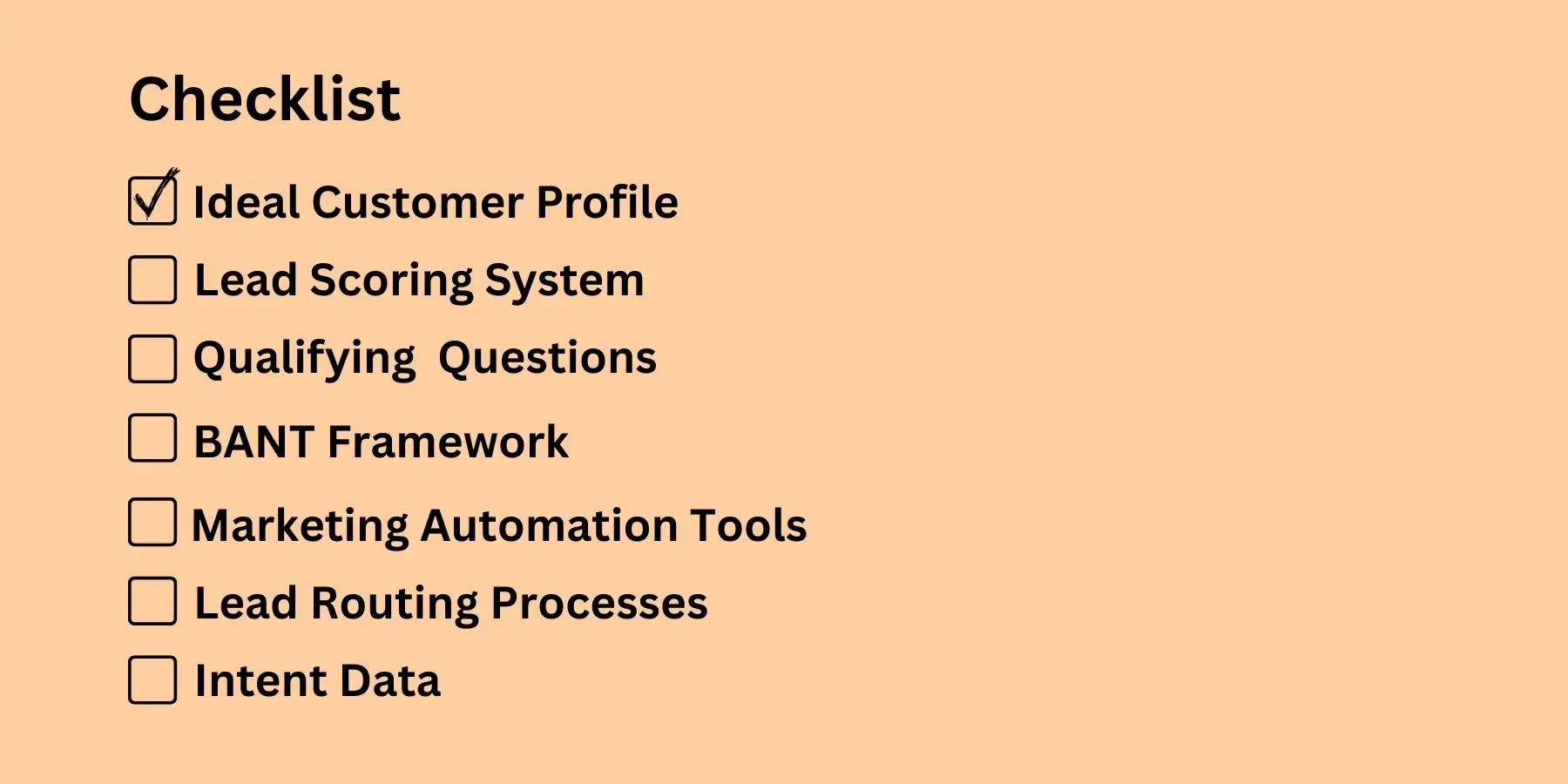
You got the idea already—inbound lead qualification transforms raw leads into categorized prospects based on their readiness to buy and on whether they’re a good fit with your ideal customer profile. And this way you focus on what really matters.
But now let's examine the process and see how to qualify inbound leads the best way possible:
1. Develop an ideal customer profile (ICP)
Just before you can qualify leads well, you need to know what your ideal customer looks like. Your ICP should include:
- Company size (employees and revenue)
- Industry/vertical
- Geographic location
- Technology stack
- Budget constraints
- Common pain points
- Decision-making process
Developing a clear ICP is indeed crucial for a good lead qualification framework. Without it, you're essentially guessing which leads are worthwhile, and you won’t be consistent in filtering your prospects.
2. Implement a lead scoring system
This is what assigns point values to various actions and attributes, helping you quantify a lead's potential value. You become more precise and consistent.
So, let’s look at how a well-designed lead scoring system might award points for, with some examples (that you might want to change and tailor to your company:
Demographic/firmographic fit (based on your ICP):
- Company size (+10 points if within target range)
- Industry (+15 points if in target vertical)
- Role/title (+20 points for decision-makers)
Behavioral signals:
- Visited pricing page (+15 points)
- Downloaded high-intent content (+10 points)
- Attended webinar (+5 points)
- Requested a demo (+25 points)
Engagement patterns:
- Email open rate (+1 point per open)
- Time on site (+5 points for extended sessions)
- Return visits (+3 points per return)
With the example above, one could determine that leads that reach a predetermined threshold (e.g., 75+ points) are considered qualified and ready for sales contact.
In order to do this the best way possible, there’s lead qualification tools that you might want to check.
3. Ask the right qualifying questions
Direct conversations remain one of the best qualification methods in b2b inbound lead generation. When engaging with leads, ask targeted questions to assess their fit and readiness to buy, like the ones below:
- What specific challenges are you trying to solve?
- What solutions have you tried previously?
- What's your timeline for implementing a solution?
- Who else is involved in the decision-making process?
- What's your budget range for this solution?
- What would success look like for you?
These questions will help you identify the lead's pain points, buying authority, implementation timeline, or budget constraints—all important factors in determining qualification.
4. Use the BANT framework for qualification
And what’s the BANT framework, you might wonder? The BANT framework (Budget, Authority, Need, Timeline) is not less than a structured way often used to qualify your leads (and to find the right questions):
Budget: Does the prospect have the financial resources to purchase your solution?
- What's your budget for this initiative?
- Have you allocated funds for this type of solution?
- How does your organization typically approach budgeting for new tools?
Authority: Is the prospect a decision-maker, or do they influence the decision-making process?
- Who else will be involved in making this decision?
- What does your approval process typically look like?
- How are purchasing decisions usually made in your organization?
Need: Does the prospect have a clear problem that your solution can solve?
- What challenges are you currently facing in this area?
- How are you handling this process now?
- What prompted you to look for a solution at this time?
Timeline: When does the prospect plan to implement a solution?
- What's your timeline for implementing a new solution?
- Are there any specific deadlines or milestones driving your timeline?
- What would prevent you from moving forward in the next [timeframe]?
While simple, this framework ensures you cover the essential aspects of qualification in every conversation.
5. Leverage marketing automation for qualification
By now you should also know that manual qualification processes don't scale. Try to find one of the many marketing automation tools that can help your business the best way possible to streamline your inbound lead qualification process. These tools can:
- Automatically score leads based on predefined criteria
- Trigger notifications when leads reach qualification thresholds
- Route qualified leads to appropriate sales representatives
- Nurture leads that aren't yet qualified
In fact, if you want to qualify leads from the very first touchpoint, Zeeg is built for exactly that. You can present qualifying forms at the moment of booking, trigger automated reminders and follow-ups, and route leads to the right rep or team automatically. And if a lead calls instead of booking online, Zeeg's AI Agent can handle that call — asking the right questions, capturing their details, and booking the meeting on the spot. Have a look here.
6. Set up efficient lead routing processes
Once your leads are qualified, they need to reach the right sales representative quickly. Effective lead routing has potential to :
- Leads are matched with reps who have relevant expertise
- Geographic territories are respected
- Workloads are balanced across the sales team
- Response times are minimized
For more information on optimizing this process, check out our guide on lead routing software.
7. Use intent data for prioritized qualification
Taking inbound lead qualification to the next level, using intent data let’s you identify prospects actively researching solutions like yours. If you try this, essentially you’ll be combining your own first-party data with third-party signals to identify high-intent leads. Here’s some examples:
First-party intent signals:
- Multiple visits to high-value pages (pricing, product specs)
- Downloading technical documentation
- Comparing product features
- Viewing customer case studies
Third-party intent signals:
- Content consumption on industry publications
- Participation in relevant forums
- Competitor website visits
- Topic-specific research activities
Using scheduling tools to qualify inbound leads
One of the most effective ways to streamline inbound lead qualification is through intelligent scheduling tools. Because everything starts from the first meeting. These platforms can serve as both qualification filters and time-saving mechanisms for your sales team.
How Zeeg helps qualify inbound leads
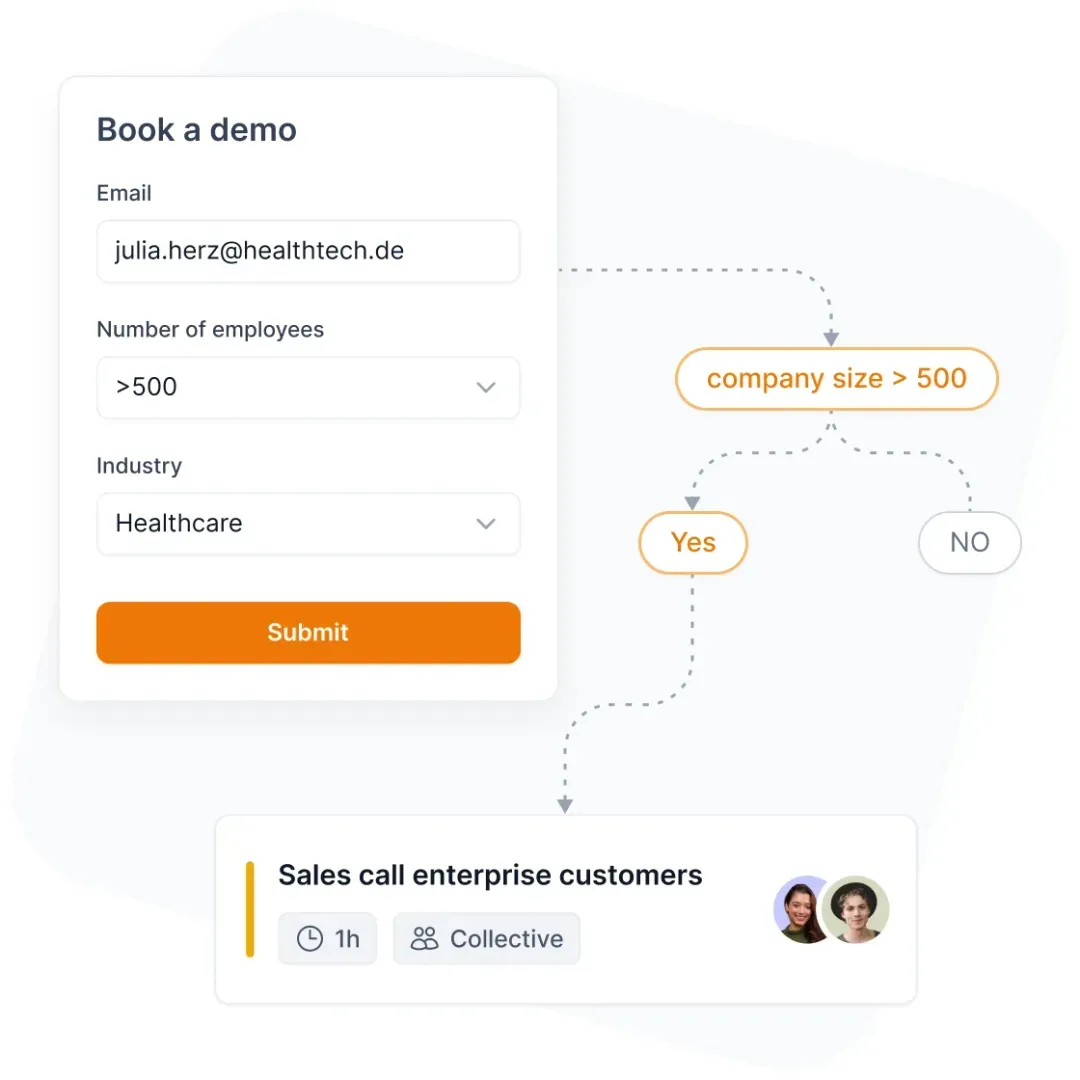
Zeeg offers specific features designed to enhance your inbound lead qualification process:
Smart routing forms: Capture essential qualification information through customizable forms that ask specific questions based on your ICP. These forms help filter out unqualified leads before they ever reach your calendar.
Conditional logic: Set up qualification rules that determine which leads can book meetings with your team. For example, you might require:
- Company size above a certain threshold
- Industry match with your target verticals
- Budget range within your product tiers
- Geographic location within your service area
Time-saving automation: Once qualified, leads can self-schedule meetings directly on your team's calendar, putting an end to the back-and-forth email chains just to arrange a meeting time.
By implementing these features, you create a seamless process where:
- Leads complete a form with qualification questions
- The system automatically scores and evaluates their responses
- Qualified leads are instantly offered available meeting times
- Unqualified leads are directed to more appropriate resources (content, lower-tier products, etc.)
- Inbound calls are handled by Zeeg's AI Agent, which qualifies the caller and books the meeting — no human needed
The importance of fast response in inbound lead qualification
In the realm of inbound lead qualification, speed matters tremendously. According to research from Harvard Business Review, companies that contact potential customers within an hour of receiving inquiries are nearly 7 times as likely to qualify the lead as those that waited even 60 minutes.¹
This finding highlights a critical opportunity in the qualification process. Leads that receive prompt follow-up are dramatically more likely to convert.
This is where tools like Zeeg provide exceptional value. By allowing qualified leads to instantly schedule meetings without the typical back-and-forth communication, you can reduce response time from hours or days to mere minutes.
Advanced inbound lead qualification techniques
Beyond the basics, several advanced techniques can enhance your inbound lead qualification process:
1. Behavioral lead scoring
Traditional lead scoring focuses primarily on demographic data and explicit actions. Behavioral lead scoring goes deeper by analyzing how prospects interact with your content and website:
- Time spent on specific pages
- Navigation patterns
- Content consumption sequence
- Return visit frequency
- Feature engagement (for product trials)
By tracking these subtle behaviors, you can identify buying signals that might not be captured in conventional scoring models.
2. Predictive lead scoring
Predictive lead scoring uses machine learning algorithms to identify patterns in your historical data that indicate high-quality leads. Rather than manually assigning point values, these systems:
- Analyze your customer conversion data
- Identify common characteristics of converted leads
- Continually adjust scoring models based on new results
- Provide probability scores for conversion likelihood
This approach typically delivers more accurate qualification than manual scoring, especially as your lead volume increases.
3. Qualification through social selling
Social media platforms, especially LinkedIn, provide valuable qualification signals:
- Company updates indicating growth or change
- Job changes suggesting new priorities
- Content engagement patterns
- Professional group membership
- Recent achievements or announcements
Sales teams can use these signals to supplement traditional qualification data and time their outreach for maximum relevance.
4. Multi-touch attribution for qualification
Instead of treating all interactions equally, multi-touch attribution helps identify which touchpoints most strongly indicate buying intent:
- Track lead interactions across all channels
- Identify patterns leading to successful conversions
- Weight qualification scores based on high-value touchpoints
- Adjust your qualification model based on actual conversion paths
This approach recognizes that not all engagement signals carry equal weight in predicting purchase readiness.
Common challenges in inbound lead qualification (and how to solve them)
Despite its advantages, inbound lead qualification comes with challenges. Here are common issues and their solutions:
Challenge 1: Misalignment between marketing and sales
Solution: Create a service level agreement (SLA) between teams that clearly defines:
- What constitutes a qualified lead
- Expected response times
- Hand-off procedures
- Feedback mechanisms
Regular cross-team meetings help maintain alignment and resolve issues quickly.
Challenge 2: Collecting sufficient qualification data
Solution: Balance the need for information with user experience:
- Use progressive profiling to gather data over time
- Implement form enrichment tools to auto-populate known information
- Leverage chatbots for conversational data gathering
- Integrate data from multiple touchpoints
These approaches help gather comprehensive data without creating friction for prospects.
Challenge 3: Response time delays
Solution: As the research shows, lead response time significantly impacts conversion rates:
- Implement automated notifications for new qualified leads
- Use scheduling tools like Zeeg to eliminate scheduling delays
- Establish response time standards (ideally within 5 minutes for highly qualified leads)
- Create follow-up sequences for different qualification levels
Faster response times dramatically improve conversion rates for inbound leads.
Challenge 4: Lead scoring accuracy
Solution: Continuously refine your lead scoring model:
- Regularly analyze which scored leads actually convert
- Adjust point values based on conversion patterns
- Implement machine learning tools for predictive scoring
- Solicit sales team feedback on lead quality
This iterative approach improves scoring accuracy over time.
How to measure inbound lead qualification success
To optimize your qualification processes, track these key metrics:
- Qualification rate: Percentage of inbound leads that meet qualification criteria
- Lead-to-opportunity conversion rate: Percentage of qualified leads that become sales opportunities
- Opportunity-to-win rate: Percentage of opportunities that close as customers
- Average sales cycle length: Time from qualification to closed deal
- Cost per qualified lead: Total marketing spend divided by number of qualified leads
- Sales team feedback scores: Ratings from sales on lead quality
Regular analysis of these metrics helps identify opportunities to refine your qualification approach.
Conclusion: Building an effective inbound lead qualification strategy
In order to have great inbound lead qualification, you should try to tick these boxes: clear criteria, a systematic processes, and the right tools. Only then you ensure that your sales team focuses on prospects most likely to become customers, and you'll be able to:
- Save your sales team valuable time
- Increase conversion rates
- Shorten sales cycles
- Improve alignment between marketing and sales
- Enhance the overall customer experience
But do not forget this rule - qualification is an ongoing process that requires regular refinement based on results and feedback. As your business changes, so should your qualification criteria and processes. Tools like Zeeg can play an important role here — both by ensuring qualified leads connect with your team quickly through smart scheduling, and by handling inbound calls automatically with its built-in AI Agent, so no lead slips through when your team is busy or offline.
Frequently asked questions about inbound lead qualification
What's the difference between MQLs and SQLs?
Marketing Qualified Leads (MQLs) have engaged with your marketing efforts and shown interest but may not be ready for sales contact. Sales Qualified Leads (SQLs) have been vetted by both marketing and sales teams and deemed ready for direct sales outreach. The key difference is sales-readiness and depth of qualification.
How quickly should you respond to inbound leads?
Research consistently shows that response time dramatically impacts conversion rates. Ideally, contact inbound leads within 5 minutes of their inquiry. According to InsideSales.com research, leads contacted within 5 minutes are 21 times more likely to enter the sales process than those contacted after 30 minutes.²
What are the most important qualification criteria for inbound leads?
While specific criteria vary by business, the most universally important factors include:
- Fit with your ideal customer profile
- Budget authority and constraints
- Timeline for implementation
- Decision-making authority
- Clear business need or pain point
- Readiness to make a change
How does lead qualification differ for B2B versus B2C businesses?
B2B inbound lead qualification typically involves more stakeholders and longer sales cycles. Qualification criteria often focus on company attributes, budget cycles, and multiple decision-makers. B2C qualification is usually simpler, focusing on individual needs, purchasing power, and shorter decision timelines.
What tools are essential for inbound lead qualification?
Essential tools include:
- CRM system for tracking lead interactions and data
- Lead scoring software for consistent evaluation
- Marketing automation platform for nurturing and routing
- Scheduling tools like Zeeg for streamlining meetings with qualified leads
- Analytics platforms for measuring performance
Explore our comprehensive guide on lead qualification tools for more information.
How can I improve alignment between marketing and sales for better lead qualification?
To improve alignment:
- Create a shared definition of qualified leads
- Establish regular feedback mechanisms
- Develop a formal SLA between departments
- Use common metrics to measure success
- Implement joint review sessions to evaluate qualification criteria
- Create a closed-loop reporting system to track leads through the entire funnel
This collaborative approach ensures both teams work toward the same qualification goals.
Sources
Zeeg is Europe's leading AI voice agent and appointment scheduling software in one solution — GDPR-compliant, made in Germany. Start for free →